 Speedy UK Deliveries
 100% SECURE PAYMENT
 VOLUME DISCOUNTS
 Contact us
Speedy UK Deliveries100% SECURE PAYMENTVOLUME DISCOUNTSContact us
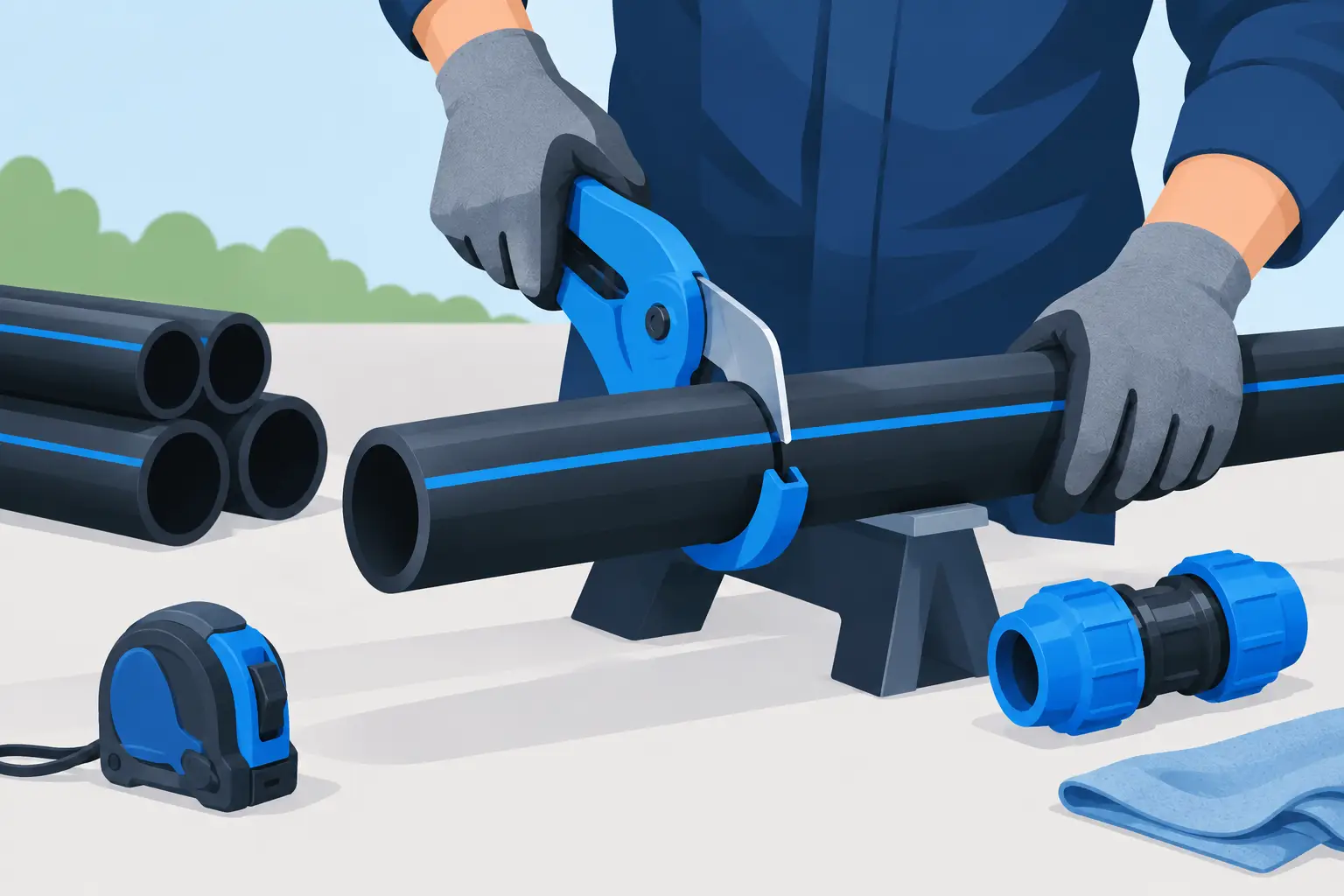
A water-pipe joint can only be as good as the pipe end going into it. To cut MDPE safely, make a clean, square cut without crushing, scoring or contaminating the pipe. It is a small preparation job, but it makes a real difference to whether a compression fitting seals first time and remains dependable once the trench is backfilled.
MDPE is flexible, tough and widely used for cold-water supply lines on domestic, agricultural and commercial work. That flexibility is useful during installation, particularly when working with pipe supplied in coils, but it also means the pipe needs to be held and cut properly. A rushed cut with the wrong tool can leave an angled edge, a pinched bore or a damaged sealing area.
For most common blue MDPE water-pipe sizes, a purpose-made plastic pipe cutter is the practical choice. A sharp ratchet cutter gives control and produces a square edge with minimal effort. Select a cutter that covers the outside diameter of the pipe being installed, whether that is a smaller domestic supply or a larger water main.
A dedicated cutter is preferable to a general-purpose saw. Sawing can work when no other option is available, but it is slower and more likely to create swarf and an uneven face. If a saw must be used, secure the pipe without flattening it, use a fine-tooth blade, and clean the bore and pipe end thoroughly afterwards. Do not use a grinder or abrasive cutting disc. Heat, melted plastic and debris are poor preparation for a potable-water connection.
Before starting, inspect the cutter blade. A blunt, chipped or resin-covered blade tends to drag through MDPE rather than slice it cleanly. Replace a worn blade rather than forcing the cut. This is particularly worthwhile on a job with multiple connections, where consistent pipe preparation saves time at commissioning.
First, confirm that the line is isolated, depressurised and drained where necessary. Never cut into a live or pressurised water supply. If the pipe is in an excavation, also establish what other services are present and keep the work area clear. Do not put hands or tools where an unsupported pipe could spring or move unexpectedly.
Measure from the end of the pipe or fitting spigot, not from a guessed position on the coil. Mark the cut line clearly with a suitable marker. Where a compression fitting is being used, allow enough straight, undamaged pipe to enter the fitting fully. A pipe that is cut too short may appear connected but can sit under unnecessary strain once the run is positioned.
Coiled MDPE has stored tension. Uncoil only the amount needed and keep it controlled, particularly in cold weather when the pipe is less willing to relax. For larger diameters, or where the pipe is trying to twist back into shape, a second person can hold the pipe steady while the cut is made. That is safer than trying to restrain a lively coil with one hand and operate a cutter with the other.
Keep the pipe end clean. On a new installation, prevent soil, standing water and debris entering the bore. For potable-water work, cleanliness is not optional: dirt trapped in a fitting can compromise the seal and introduce contamination into the supply.
Place the cutter jaws around the pipe directly on the marked line. Hold the cutter at 90 degrees to the pipe so the blade meets the surface squarely. Check this before applying pressure. An angled cut reduces the contact area within the fitting and can make it harder to achieve the correct insertion depth.
Close the cutter gradually and evenly. With a ratchet cutter, use controlled squeezes rather than sudden force. Let the blade do the work. If the pipe begins to distort excessively, stop and check the blade, cutter size and position. MDPE should be cut, not crushed.
Once separated, inspect the end from all sides. The face should be flat and square, with no splits, deep score marks or flattened section. Look into the bore for loose material. Remove any light burr carefully with a clean deburring or chamfering tool where the fitting manufacturer permits it, taking care not to remove too much material or leave swarf inside the pipe.
Do not heat the pipe to make cutting easier, and do not attempt to straighten a cut end with an open flame. MDPE is a thermoplastic, but heat can alter its shape and damage the section that needs to seal. If the pipe end has been kinked, badly scratched or distorted, cut back to sound material rather than hoping the fitting will compensate for it.
A square cut is only the first part of a reliable joint. Check the fitting instructions for the specific system being installed. For standard MDPE compression fittings, the pipe normally needs an appropriate pipe liner or stiffener inserted into the bore. The liner supports the pipe internally and helps it resist compression at the joint.
Use the correct liner for the pipe diameter and wall thickness. Do not assume one insert suits every product. MDPE pipe and fittings are available in several sizes and pressure ratings, so matching components matters. Where the installation carries drinking water, use WRAS-approved pipe and compatible fittings intended for that application.
Before assembly, wipe the outside of the pipe and the inside of the fitting components clean. Ensure the nut, grip ring and seal are correctly positioned in accordance with the fitting design. Push the pipe fully home to the fitting stop. If the manufacturer specifies a pipe insertion depth, mark it on the pipe before assembly. This gives a quick visual check that the pipe has not backed out while tightening.
Tighten the fitting to the manufacturer’s instructions. Overtightening is not a substitute for a clean cut or correctly fitted liner. It can damage components, make later maintenance difficult and still fail to cure an incorrectly seated pipe. Hand-tightening followed by the stated additional tightening method is common, but the fitting instructions always take priority.
The most frequent issue is cutting the pipe at an angle. It often happens when a saw is used freehand or when a cutter is held at a slight tilt. The fitting may initially seem secure, but the seal is not working against an even surface.
The second is forgetting the pipe liner. Because MDPE is flexible, the fitting needs the pipe to be supported internally where the compression force is applied. A joint without the right liner is more likely to deform or leak, especially under pressure changes.
Finally, avoid connecting dirty or damaged pipe. Scratches around the sealing area, grit inside the fitting, and pipe that has been crushed by a vice or improvised clamp can all create avoidable faults. Cutting back a short section of pipe is usually quicker and cheaper than reopening a trench to repair a leaking connection.
After making the joint, carry out the required pressure and leak test before covering the pipework. Keep the connection visible while the system is brought up to pressure and inspect for weeping around the fitting. Follow the applicable installation requirements and the pipe and fitting manufacturer’s guidance for testing, flushing and commissioning.
Where pipework runs underground, bed and surround the MDPE in suitable material so sharp stones cannot bear against it. Avoid tight bends immediately next to a fitting, as side-load can pull a joint out of alignment over time. Protect and mark the route as required before backfilling, especially where future excavation could disturb the service.
A clean cut takes moments, but it supports every stage that follows: full insertion, correct sealing, successful testing and a water supply that stays dependable after the ground is reinstated. Keep a suitable pipe cutter and the correct liners with the rest of the job materials, and treat each pipe end as part of the finished installation rather than a quick preparation task.









 Sign in
