 Speedy UK Deliveries
 100% SECURE PAYMENT
 VOLUME DISCOUNTS
 Contact us
Speedy UK Deliveries100% SECURE PAYMENTVOLUME DISCOUNTSContact us
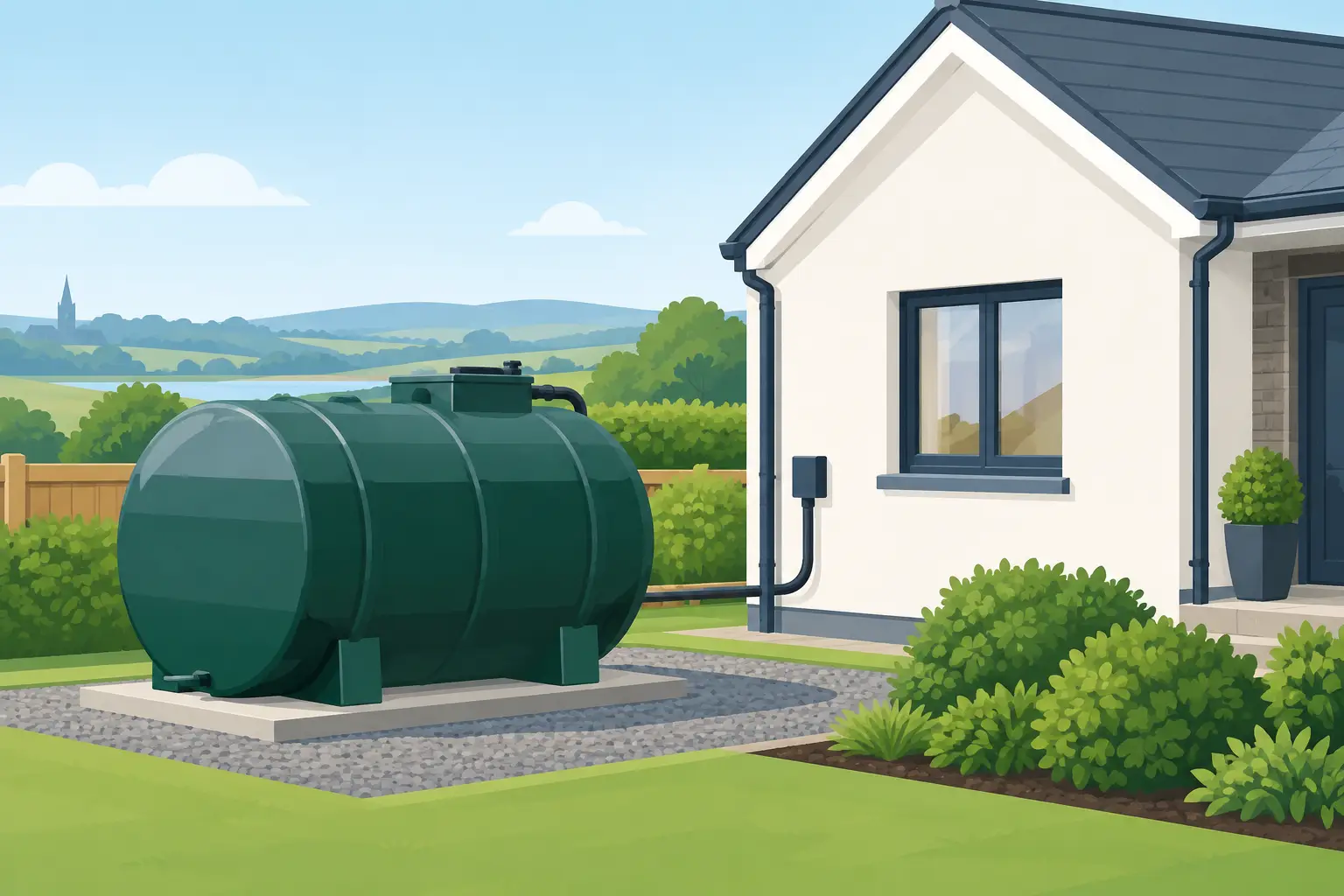
A fuel tank is not a fit-and-forget purchase. Whether it holds domestic heating oil, red diesel for plant or fuel for agricultural equipment, its location, base and protection all affect safety, access and the risk of an expensive spill. This fuel tank storage guide sets out the practical checks to make before ordering a tank or replacing an existing installation.
The first decision is what the tank will store. Kerosene, gas oil, diesel, waste oil and petrol have different properties and may be subject to different storage requirements. A standard plastic oil tank intended for heating oil is not automatically suitable for every fuel or commercial application. Always confirm that the tank material, fittings and manufacturer approval are suitable for the product being stored.
Capacity should reflect realistic consumption rather than simply buying the largest tank that will fit. A larger tank can reduce delivery frequency, but it also increases the potential impact of a leak and may bring additional regulatory considerations. For a domestic heating installation, consider seasonal usage, delivery access and how long the property could be left unoccupied. On farms and commercial sites, factor in machinery demand, refill schedules and whether the tank will be used by more than one vehicle or operator.
Petrol needs particular care. It should not be stored in a conventional bulk plastic oil tank. If petrol storage is required, seek advice on the appropriate approved container, installation arrangement and applicable fire-safety requirements.
Plastic fuel tanks are a practical choice for many domestic, agricultural and light commercial applications. They are corrosion-resistant, comparatively easy to position and available in a range of capacities and shapes. A single-skin tank may be suitable where the installation risk is low and secondary containment is provided separately. A bunded tank includes an outer containment layer designed to retain fuel if the inner tank fails.
A bunded option costs more initially, but it can be the sensible choice where there is a drain, watercourse, well, ditch or sensitive ground nearby. It is also worth considering for exposed sites, busy yards and locations where the tank could be struck by plant, vehicles or stored materials. The cost of recovering spilled oil from soil or drainage is rarely minor.
Check the practical specification, not just the litre capacity. Confirm the footprint, overall height, fill-point position, outlet connection size and whether a gauge is included. A low-profile tank can help where sightlines or access are restricted, while a slimline model may suit the side of a property. An integrally bunded tank will have a larger external footprint than an equivalent single-skin model, so allow for this when planning the base.
A good tank location makes filling, inspection and maintenance straightforward without creating avoidable fire or pollution risks. The delivery driver must be able to reach the fill point safely, while the tank itself needs clear access for visual checks and future replacement. Avoid placing it where gates, parked vehicles, bins or building work will regularly obstruct it.
Keep the tank away from potential ignition sources, building openings and places where a fire could spread quickly. The exact separation requirements can depend on the fuel type, tank capacity, installation setting and whether suitable fire-resistant screening is used. Requirements also differ between domestic and business installations, and Scottish rules may not match those in England and Wales. Check the current guidance from the relevant authority, Building Regulations and the tank manufacturer before finalising the position.
Look below ground as well as above it. Do not locate a fuel tank where a leak could enter a surface-water drain, foul drain, soakaway, ditch or watercourse. Nearby inspection chambers, channel drainage and gullies deserve particular attention: an oil spill can travel much further through a drainage system than it appears to on the surface.
For commercial, agricultural and higher-risk installations, environmental legislation may require specific pollution-control measures. Your insurer may also set conditions on tank siting, bunding, security or protection from vehicle impact. These checks are best made before a base is poured.
The fill point should be accessible without the delivery hose crossing a public pavement, sharp edges or areas used by moving vehicles. Site staff should be able to see the delivery taking place and stop it if there is a problem. Keep the vent clear, correctly positioned and protected from damage.
Leave space around the tank for cleaning and inspection. If a small leak starts at an outlet, seam or fitting, it is far easier to spot when the tank is not hidden behind fencing, stored materials or dense planting.
Fuel is heavy. A tank that looks modest when empty can place a substantial load on its base when full, so the support must be level, stable and sized for the complete tank footprint. The base should extend beyond the tank edges in line with the manufacturer’s installation instructions, rather than supporting only the centre of the tank.
A properly prepared concrete slab is commonly used because it provides a durable, even surface. Paving slabs may be appropriate for some smaller domestic tanks if they are correctly bedded on a compacted, stable foundation, but loose-laid slabs or uneven ground are not a reliable solution. Timber, pallets, blocks and improvised supports can create point loading, movement and eventual tank distortion.
Consider ground conditions before construction. Made-up ground, soft clay, slopes and areas affected by standing water may need more preparation than a sound, level yard. The base should not settle, rock or allow rainwater to pool beneath the tank. If vehicles operate nearby, install suitable bollards or barriers without restricting delivery access or maintenance.
The tank is only one part of the installation. Use compatible fuel-grade fittings, valves, filters and pipework, and make sure the outlet arrangement can be isolated quickly. A visible, accessible shut-off valve is useful in an emergency and during maintenance. Protect exposed pipework from accidental knocks and avoid routes where it can be damaged by garden tools, livestock or site traffic.
An overfill-prevention device, accurate contents gauge and secure fill cap can prevent routine mistakes becoming spills. For unattended or publicly accessible areas, lockable caps and controlled access are sensible security measures. Fuel theft is not only a financial problem – damaged fittings can release fuel after the theft attempt.
Keep a spill kit close enough to be useful, particularly on farms, depots and workshops. Absorbent pads, drain covers and suitable disposal arrangements allow a small release to be contained quickly. Never wash spilled fuel into a drain or onto soil. If fuel reaches drainage, a watercourse or ground beyond a minor contained area, contact the relevant environmental authority and seek professional advice promptly.
A regular visual check takes little time and can identify problems before a tank fails. Look for staining, damp patches, cracking, swelling, damaged fittings, unsupported pipework and signs that the base has moved. Check that the vent is clear, the lid closes properly and the gauge reading is plausible for recent usage.
Cold weather is a useful time to inspect heating-oil systems. A sudden increase in consumption could indicate a leak, theft, a faulty gauge or a boiler issue. After storms, flooding or site works, inspect the tank, bund, barriers and nearby drainage again. Do not ignore small cracks or drips: plastic tanks and fittings should be assessed by a competent installer or replaced before the defect worsens.
Ordering the tank is only part of the job. Measure the route from the delivery point to the final position, including gates, corners, steps and overhead obstructions. Confirm whether lifting equipment is needed and arrange the base before delivery where possible. Also allow for compatible fittings, fuel line components, protective barriers and any required secondary containment.
Speedy Plastics supplies fuel, oil and waste-oil tank options alongside drainage and site-management products, helping contractors and property owners source practical materials for connected external works. Check the tank specification carefully against the intended fuel, capacity and installation conditions before placing an order.
A well-sited, properly supported fuel tank is easier to fill, easier to inspect and far less likely to create a pollution problem. Give the base, drainage and access route the same attention as the tank itself, and the installation will be better prepared for years of dependable service.









 Sign in
