Speedy UK Deliveries
 100% SECURE PAYMENT
 VOLUME DISCOUNTS
 Contact us
Speedy UK Deliveries100% SECURE PAYMENTVOLUME DISCOUNTSContact us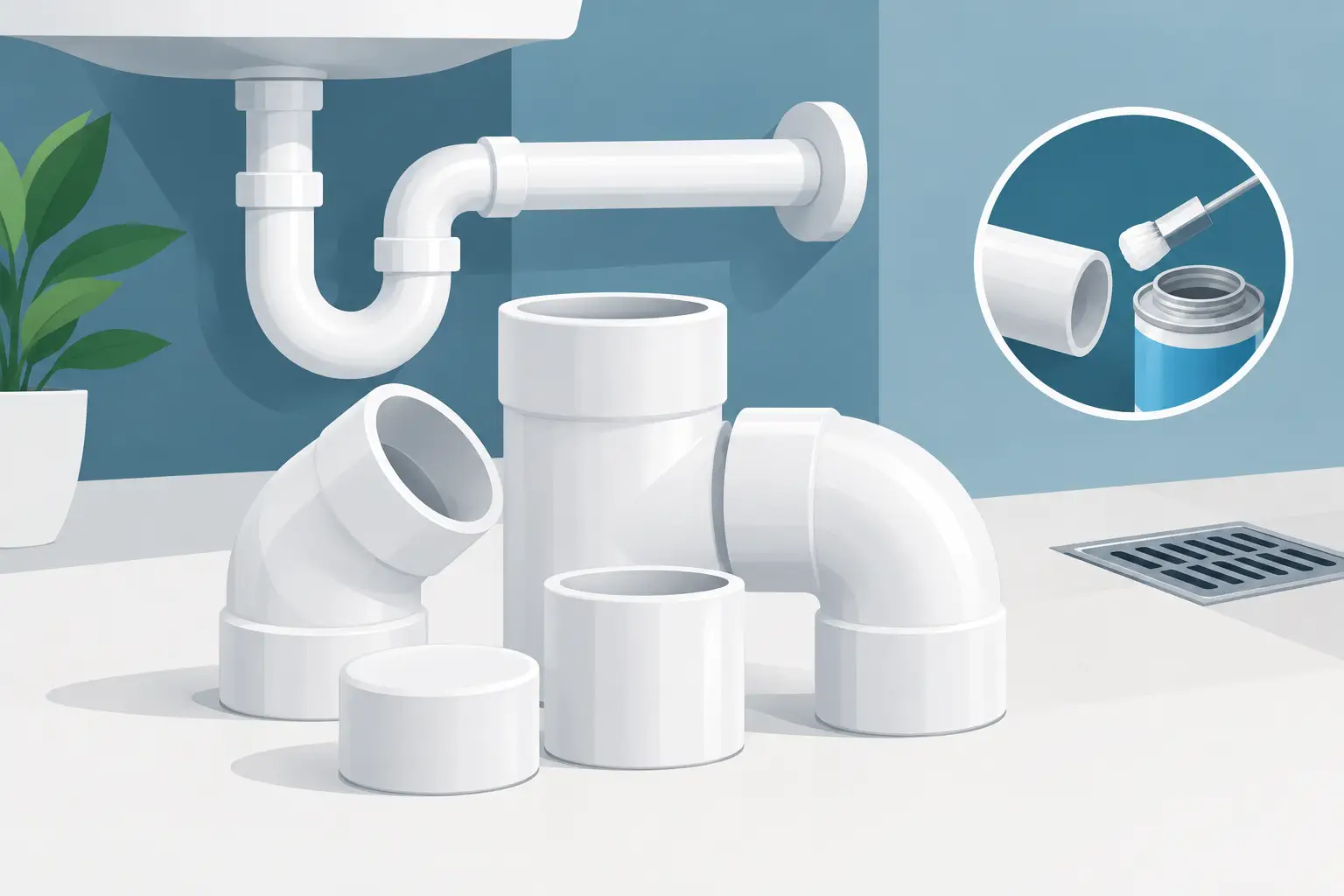
A waste run that looks straightforward can become the cause of slow discharge, leaks and unpleasant smells if the joints or falls are wrong. Solvent weld waste fittings provide a permanent, compact connection for internal waste pipework, making them a dependable choice for bathrooms, kitchens, utility rooms and commercial washroom installations.
Unlike push-fit connections, which rely on a rubber seal and can be dismantled, solvent weld systems chemically bond the pipe and fitting together. That makes the finished run rigid and neat, but it also means measurements, alignment and dry assembly need to be right before adhesive is applied.
Solvent weld waste systems carry grey water from sanitary appliances to the soil stack or an external connection. Typical applications include basin wastes, baths, showers, sinks, washing machines and condensate pipework where the relevant pipe size and installation arrangement are suitable.
In UK domestic work, 32mm pipe is commonly used for basin waste, while 40mm is often specified for baths, showers, sinks and appliance outlets. A 50mm system may be required where higher flow rates, longer runs or commercial applications call for greater capacity. The correct diameter is not simply a matter of what will fit physically. It should reflect the appliance, run length, loading, fall and the requirements of the installation.
A solvent weld system is particularly useful where pipework is boxed in, routed through a service void or installed beneath a floor. Once properly made, its joints are not intended to move or come apart. That permanence suits fixed pipework, but it is less convenient where future access or frequent alteration is expected.
A complete waste run normally needs more than straight pipe and a bend. The layout may require tees to connect branches, swept bends to change direction, socket couplers for joining lengths, reducers for changing sizes and access fittings for maintenance. Traps, appliance connections and soil connections must also suit the pipe diameter and joint type being used.
The first check is size. Do not assume that pipes with a similar outside appearance will join together. Solvent weld waste pipe is designed for solvent weld fittings, and push-fit waste pipe is designed around a different connection method and tolerance. Some components may be described as universal or suitable for more than one system, but this should be confirmed in the product specification rather than guessed on site.
The second check is the route. Waste pipe needs a continuous fall towards the discharge point so water and waste can drain freely. Too little fall can leave standing water and encourage blockages. Excessive fall is not automatically better either, as water can run away too quickly in certain arrangements while solids are left behind. Keep the route direct where possible, use sweeping changes of direction rather than unnecessary tight turns, and allow for clips that hold the pipe without forcing it out of line.
For visible installations, white solvent weld waste fittings are a common choice in bathrooms, kitchens and utility areas. Black, grey or other finishes may suit external or less conspicuous installations, provided the system is appropriate for the location and protected where needed. Match the product to its intended use rather than selecting on colour alone.
Every fitting introduces a change in flow path, so use only what the run needs. A swept bend generally gives a better route for waste water than a sharp directional change. Tee branches should be positioned so incoming flow joins the main run cleanly, without creating an awkward backfall or obstruction.
Access matters on longer or more complex runs. A rodding point, access fitting or removable trap can make future maintenance considerably easier. This is especially worthwhile behind kitchen units, beneath baths and in commercial premises, where opening up finished surfaces to clear a blockage is costly and disruptive.
Solvent cement is not a gap filler. It softens the mating plastic surfaces so they fuse as the pipe enters the fitting socket. A good joint depends on clean, correctly cut components and a prompt, positive assembly.
Start by measuring the route and dry-fitting the pipe and solvent weld waste fittings. Mark the insertion depth and, if the fitting orientation matters, make a small alignment mark across the pipe and socket. This is useful on bends and tees, where even a slight rotation can change the fall or make the next connection difficult.
Cut the pipe square using a suitable pipe cutter or fine-tooth saw. Remove burrs from the inside and outside of the cut edge. An internal burr can restrict flow and collect debris; a rough outer edge can prevent the pipe from entering the socket fully. Wipe the surfaces clean and dry before applying the correct solvent cement for the pipe material.
Apply the cement evenly as instructed by the manufacturer, then push the pipe fully home with a firm twisting motion. Hold it briefly to prevent it backing out while the bond takes hold. Wipe away excess cement from the outside of the joint. Work efficiently, as solvent cement starts acting quickly and should not be repeatedly brushed over once it begins to dry.
Allow the joint to cure for the manufacturer’s stated period before testing or putting the system into service. Cure time can be affected by temperature, ventilation and pipe size, so a cold installation should not be treated in the same way as a warm indoor fitting job. Keep solvents away from ignition sources and use them in a well-ventilated area.
Leaks around a solvent weld joint are often caused by poor preparation rather than a faulty fitting. A pipe cut at an angle, a missed burr, contaminated surfaces or insufficient insertion can all compromise the bond. Applying excessive cement is not the answer: it can run into the bore and create a lip that catches debris.
Another frequent issue is assembling the run without checking the final position of each fitting. Because solvent weld joints are permanent, a bend glued a few degrees out of line may require a section of pipe to be cut out and replaced. Dry assembly takes a little longer at the start, but it avoids wasted fittings and delays later.
Poor support can also shorten the useful life of a waste installation. Use suitable pipe clips at sensible intervals and close to changes in direction, allowing for thermal movement where the manufacturer advises it. Pipework should not be left sagging between fixings or used to carry the weight of a trap, valve or appliance connection.
Avoid mixing systems without a confirmed compatible adaptor. This is particularly relevant when connecting to existing push-fit waste, older pipework, a soil stack or a trap outlet. A correctly sized conversion fitting is a small cost compared with tracing a leak after units, tiles or ceilings are back in place.
Before ordering, measure the full route rather than estimating only the straight-line distance. Include vertical drops, offsets around joists or cupboards, the insertion depth of fittings and a small allowance for cuts. Identify each appliance connection, trap outlet, branch and final connection point.
It is practical to order a modest number of additional couplers, bends or clips when the route is being installed in a new or altered space. Site dimensions can differ from drawings, and having compatible components available prevents an otherwise simple job stopping over one missing fitting. For trade buyers handling several jobs, maintaining a consistent solvent weld waste range also reduces compatibility issues between installations.
Speedy Plastics supplies trade-ready drainage and waste components for domestic and commercial projects, with clear sizing to help match pipework, fittings and connected drainage products. Check the product details for dimensions and intended application before placing an order, particularly where a system joins existing pipework.
A carefully planned solvent weld waste installation should disappear into the background once the work is finished: correctly sized, securely clipped, accessible where it needs to be and able to drain without fuss for years to come.