 Speedy UK Deliveries
 100% SECURE PAYMENT
 VOLUME DISCOUNTS
 Contact us
Speedy UK Deliveries100% SECURE PAYMENTVOLUME DISCOUNTSContact us
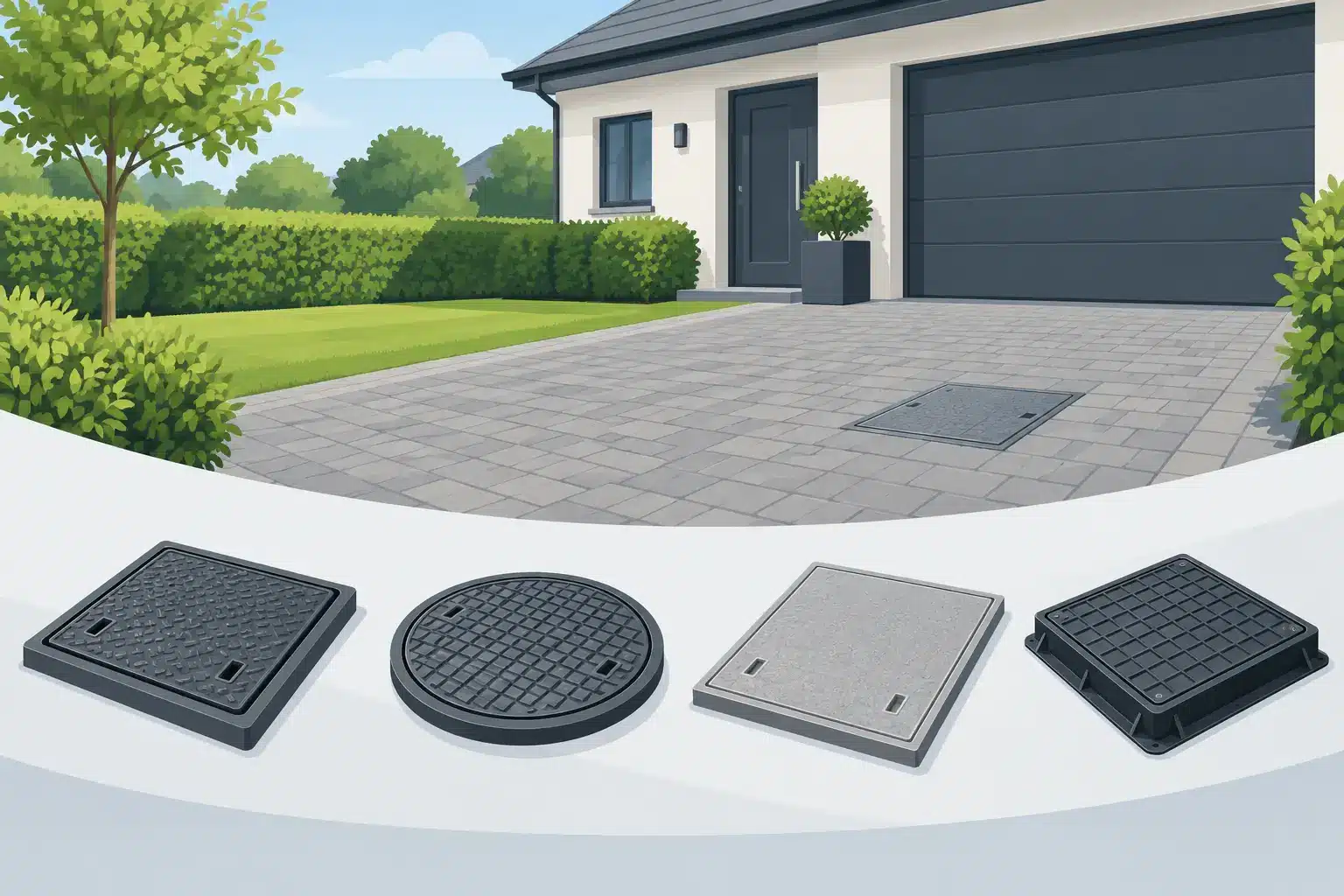
A driveway cover is only inconspicuous when it is doing its job properly. The wrong unit can crack under vehicle loads, rock in its frame, admit surface water or leave an awkward patch in an otherwise finished drive. The best driveway access covers combine the correct load rating, clear opening size, frame depth and finish for the traffic and surfacing involved.
For most domestic work, the cover is the final part of an inspection chamber or drainage access point. It must still allow future rodding, cleaning and inspection without compromising a driveway’s strength, appearance or drainage. Selecting it early prevents costly alterations when block paving, resin, tarmac or concrete is ready to be laid.
There is no single best cover for every drive. A private driveway used only by cars has very different demands from a shared access road, farm entrance or commercial yard where delivery vehicles may pass. Start with the expected wheel loads, then match the cover to the chamber opening and finished surface level.
For domestic drives, a correctly installed B125 cover and frame is often the appropriate starting point. Under BS EN 124, B125 covers are designed for areas used by pedestrians and cars, including domestic driveways and similar parking areas. However, this does not make B125 suitable for every location. Where vans, lorries, skip vehicles or regular heavier traffic cross the access point, assess the actual loading and consider a higher class such as C250 or D400 where the installation conditions require it.
The frame matters as much as the lid. A high-quality cover fitted into weak or poorly supported bedding will fail long before its stated load class is reached. The surrounding concrete haunching and surface construction must transfer wheel loads into the ground, rather than concentrating them on the frame edges.
A recessed tray cover can produce a neat block-paved or tiled finish, while a solid-top ductile iron cover may suit tarmac and concrete. Both can be suitable, but appearance must not overrule loading. Check the manufacturer’s marked classification and intended application, rather than assuming that a heavy-looking cover is vehicle rated.
Also consider how traffic approaches the cover. A wheel repeatedly braking, turning or crossing an edge at an angle puts more stress on the frame than occasional straight-line traffic. Covers near gateways, tight turns and garage entrances deserve particular care.
Ductile iron remains a dependable choice for trafficked areas. It offers high strength for its size, resists impact well and is widely available in recognised load classes. A ductile iron cover with a solid top is a practical option for concrete or tarmac driveways where a straightforward, durable finish is the priority.
Recessed galvanised steel covers are designed to accept an infill such as block paving, slabs or tiles. They are popular where the chamber needs to blend into a landscaped or paved drive. The tray depth must suit the proposed paving build-up, including bedding material where applicable, so the finished infill sits securely and flush with adjoining units.
Composite covers can be useful where reduced manual-handling weight, corrosion resistance or a non-metallic specification is required. They vary substantially by product and load rating. A composite unit should only be chosen for driveway use when its stated classification is suitable for the vehicles expected on site.
Plastic inspection chamber lids are often suitable for pedestrian areas, gardens and light-duty locations, but should not automatically be used beneath a trafficked driveway. Always distinguish between a chamber’s access lid and a load-rated driveway cover. The chamber, risers and cover arrangement need to work as one system.
A solid-top cover is the efficient choice when the driveway will be finished in concrete, asphalt or another continuous surface. It is less dependent on matching an infill and is generally quicker to fit. Position it carefully so it does not sit in the main wheel track where this can reasonably be avoided.
A recessed cover is better where maintaining the visual pattern of block paving or paving slabs matters. It needs more planning and careful cutting. The inserted blocks should be stable, evenly bedded and easy to remove when access is needed. Avoid permanently bonding the infill into place, as the cover must remain serviceable.
One of the most common ordering errors is measuring the outer size of an old cover and assuming it identifies the replacement. Covers are commonly described by their clear opening, which is the usable opening inside the frame, not necessarily the overall external dimensions.
Measure the chamber opening in both directions, particularly on older brick chambers where sides may not be perfectly square. Record the external frame space available, required cover depth and finished ground level. If replacing a cover during a driveway refurbishment, account for any change in surfacing thickness before choosing a frame.
Common square clear openings include 450 x 450mm and 600 x 600mm, though many chamber sizes and rectangular formats are in use. Do not reduce an opening simply to suit a convenient cover size if this prevents safe access for maintenance or conflicts with the chamber design.
For new drainage work, coordinate the access cover with the inspection chamber from the outset. A suitable chamber base, riser sections, sealing rings and cover frame help create an accessible system that can be tested, maintained and finished at the correct level.
A driveway cover should be installed on a sound, level mortar or concrete bedding, with full support beneath the frame. Packing corners or leaving voids under the frame invites movement. The frame should be brought accurately to final level before the surrounding driveway construction is completed.
The chamber structure below must also be stable. This is especially relevant where ground has been recently excavated for 110mm or 160mm underground drainage, water pipe or ducting. Backfill in suitable layers and compact it correctly around the chamber, taking care not to distort plastic components. Poorly compacted ground can settle later, leaving the cover unsupported or below the finished surface.
Where concrete is used around the frame, allow it to gain adequate strength before trafficking the area. The exact curing period depends on the mix, temperature and site conditions, but early vehicle loading is a false economy. Keep the cover clean during works so mortar, grit and paving debris do not clog lifting points or seating faces.
Finished level is critical. A cover set too high can catch tyres, create noise and become a trip point. One set too low may collect water and debris around the edge. On sloping drives, arrange falls so water is not directed into every frame joint. The cover is an access point, not a substitute for properly designed channel drainage or surface-water management.
Some sites need a more cautious specification. If a delivery lorry, refuse vehicle, agricultural machinery or plant may cross the cover, establish the heaviest likely vehicle rather than choosing based on normal day-to-day car use. The occasional heavy vehicle is often what damages an under-specified installation.
Shared private roads, commercial forecourts and drives serving workshops may also require advice from the project designer, local authority or site engineer. Loading, frame support, surfacing depth and chamber construction should be considered together. A higher-rated lid alone cannot correct a weak chamber or unsuitable foundations.
Drainage access points should also remain practical to open. Very large or heavy covers may need suitable lifting keys and safe handling procedures. This matters for contractors carrying out jetting or inspection work and for property owners who may need access after a blockage.
Before placing an order, confirm the clear opening, overall frame dimensions, required load class, material, cover depth and final driveway finish. Check whether the product includes both cover and frame, as these are not always supplied in the same way. For recessed units, confirm the available tray depth and how the infill will be supported.
Speedy Plastics supplies drainage and access products for domestic and trade installations, helping customers source compatible chamber and pipework components from one place. Choosing the right cover before the driveway is finished keeps the final access point secure, usable and properly suited to the work beneath it.
A well-specified driveway cover should disappear into the project visually, but never from the maintenance plan. Leave its position recorded, keep the lifting points accessible and make sure the next person opening it finds a sound, correctly rated cover rather than an avoidable problem.









 Sign in
