 Speedy UK Deliveries
 100% SECURE PAYMENT
 VOLUME DISCOUNTS
 Contact us
Speedy UK Deliveries100% SECURE PAYMENTVOLUME DISCOUNTSContact us
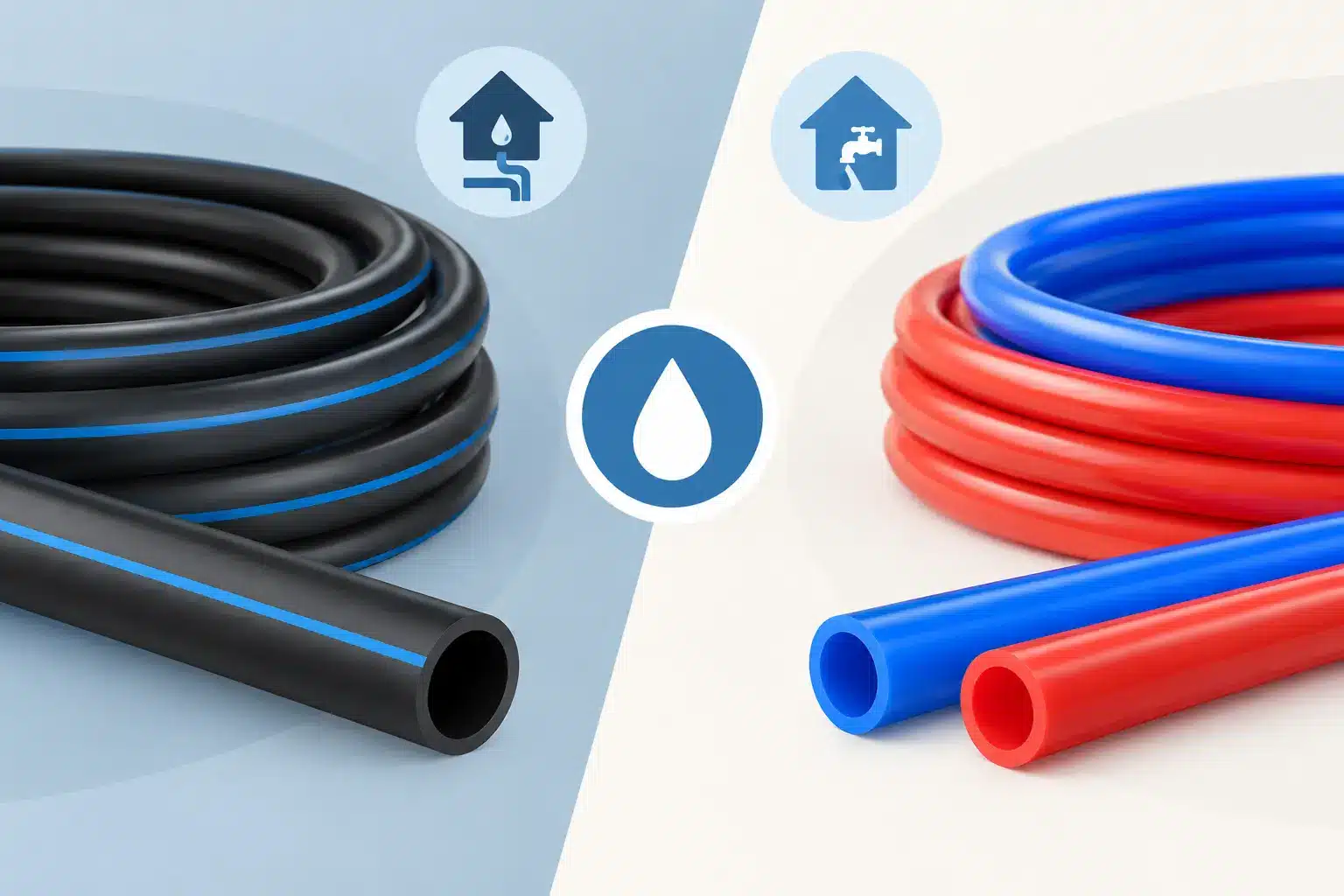
A water supply installation can look straightforward until the pipe reaches the wrong point in the project. Choosing between MDPE versus PEX water pipe is not simply a question of which is easier to handle or cheaper per metre. These materials are designed for different parts of a cold-water system, use different connection methods and need to meet the relevant UK water regulations for their intended application.
For most domestic and commercial projects, the practical answer is clear: use blue MDPE for the incoming or buried cold-water main, then use a suitable internal plumbing system, such as PEX, after the supply enters the building. Getting that division right helps avoid compatibility problems, unnecessary joints underground and a pipe specification that is unsuitable for its environment.
MDPE stands for medium-density polyethylene. Blue MDPE pipe is widely used for potable cold-water supply lines, particularly external service pipes running from a boundary connection, meter location or private water source to a property. It is supplied in coils, commonly in 20mm, 25mm, 32mm and larger diameters, which makes it well suited to long, continuous underground runs.
PEX is cross-linked polyethylene. It is commonly used within buildings for hot- and cold-water plumbing, including feeds to bathrooms, kitchens, utility rooms and heating-related applications where the selected product is rated for the duty. Its flexibility makes it useful in stud walls, floors and confined service voids, often with fewer directional fittings than rigid pipework.
The key point is that pipe material does not determine suitability on its own. The pipe must be approved and rated for the water being carried, its operating temperature and pressure, the installation environment, and the fittings being used. A WRAS-approved MDPE system intended for potable cold water is a very different proposition from a general-purpose polyethylene or PEX pipe.
MDPE is the established choice for external cold-water service pipes. Its tough polyethylene construction copes well with buried installation when it is laid and protected correctly, while long coils reduce the number of joints that would otherwise be needed along a trench.
A typical private supply may use 25mm MDPE for an individual domestic connection, although the correct size depends on the required flow rate, run length, incoming pressure and number of outlets served. A long run to a house, workshop, farm building or commercial unit may need 32mm or a larger diameter to limit pressure loss. Reducing the pipe size too early can leave showers, taps or appliances short of flow when several outlets operate together.
MDPE is also a practical material where the route is not perfectly straight. Coiled pipe can follow gradual changes in direction without installing a fitting at every bend, provided the manufacturer’s minimum bend radius is respected. Fewer buried joints generally mean a cleaner installation and fewer potential points to inspect or repair later.
For potable installations, select pipe that is specifically suitable for drinking water and use compatible fittings from the same intended system. WRAS approval is a useful specification check, but it should be considered alongside the manufacturer’s instructions and the requirements of the local water undertaker.
MDPE is normally joined with purpose-made compression fittings, including couplers, elbows, tees, stop taps and transition fittings. The pipe end should be cut square, clean and free from damage before assembly. Where required by the fitting manufacturer, use the correct pipe liner or insert to support the bore and maintain a secure connection.
Buried pipework needs more attention than simply placing a coil in a trench. The route should be protected from sharp stones and point loading, with appropriate bedding and backfill. It should also be installed at the required depth and marked with warning tape where appropriate. Required cover, separation from other services and arrangements for entering the property can vary by site and local water authority requirements, so check these before excavation begins.
Blue MDPE should not be left exposed to prolonged sunlight unless the product specification expressly allows it. Protect any above-ground sections and use suitable ducting or sleeving where the pipe passes through walls or where mechanical damage is possible.
PEX comes into its own once water distribution moves inside the building. A flexible PEX pipe can be routed through joist zones, behind linings and around service penetrations more easily than rigid pipe. This can speed up first-fix work and reduce the number of elbows needed in a compact installation.
For a bathroom refit, extension or new-build internal plumbing layout, PEX can be particularly useful for long runs from a manifold or distribution point to individual outlets. Fewer changes of direction may improve flow and reduce the time spent assembling fittings. It can also be a practical choice where access is limited and a continuous pipe run can be pulled through a protected route.
However, PEX is not one universal product. Different PEX plumbing systems have specific temperature, pressure and installation limits. For potable cold water, hot water and heating circuits, choose a pipe and fitting system that is certified for the intended use. Barrier PEX is commonly specified where the system application requires protection against oxygen ingress, especially in heating installations, but it does not turn every PEX pipe into an external water-main pipe.
PEX should be supported properly, protected at penetrations and kept away from damage, excessive heat and direct UV exposure unless the manufacturer states otherwise. Connection methods vary too. Depending on the system, fittings may be push-fit, compression, crimp, press or expansion type. Do not assume fittings designed for one PEX system will suit another pipe brand or wall thickness.
For an underground incoming main, temperature is usually less of a concern than pressure, ground conditions and the need for a reliable potable-water connection. MDPE is designed around that cold-water service role. The relevant pressure rating must still be suitable for the available supply pressure and the installation design.
Inside the property, water temperature becomes a major deciding factor. A pipe that is suitable for cold water may not be suitable for hot distribution or central-heating temperatures. Check the continuous working temperature, maximum temperature, pressure rating at that temperature and the approved application before ordering.
Water quality also matters. Only use materials approved for contact with potable water where they will carry drinking water. On projects involving private supplies, pumps, stored water or agricultural buildings, confirm that the pipework is suitable for the source water and any proposed treatment process. If there is any uncertainty, the water authority, system manufacturer or a qualified installer should be consulted before installation.
MDPE can appear more economical for an external run because it is supplied in long coils and requires relatively few fittings. On a 20-metre or 50-metre trench run, avoiding multiple joints can save both fitting costs and installation time. The final cost should include compression fittings, stop taps, pipe protection, ducting where needed and excavation materials, not just the coil of pipe.
PEX may cost more or less per metre depending on the chosen system, but its value often lies in labour efficiency. A flexible run through a building can replace several lengths of rigid pipe and multiple elbows. That said, manifold systems, specialist tools and proprietary fittings can alter the overall cost, particularly on a small repair where conventional pipework is already in place.
For trade buyers, standardising on compatible pipe and fittings is often more valuable than chasing the lowest individual item price. It reduces the risk of mismatched components arriving on site and helps keep the installation moving.
Choose blue WRAS-approved MDPE when the job involves a buried or external potable cold-water supply. It is the sensible option for the route from a meter, boundary box, stop tap or private source to the building, subject to the relevant installation requirements.
Choose a specified PEX plumbing system for internal distribution where flexibility, quick routing and reduced fittings are useful. Ensure it is rated for cold water, hot water or heating as applicable, and use the fittings, tools and installation method approved for that system.
The handover point between the two is often where projects go wrong. Plan the transition before ordering: identify the internal pipe material, the required adaptor, isolation valve arrangement and whether the incoming pipe needs ducting or protection at the wall. A correctly specified transition fitting is a small item, but it prevents a last-minute compromise on site.
For a dependable water installation, start with the route and duty rather than the pipe that happens to be available. Selecting approved MDPE for the external main and a compatible internal plumbing system gives you a straightforward, serviceable setup that is easier to install properly and easier to maintain when the building is occupied.









 Sign in
