Speedy UK Deliveries
 100% SECURE PAYMENT
 VOLUME DISCOUNTS
 Contact us
Speedy UK Deliveries100% SECURE PAYMENTVOLUME DISCOUNTSContact us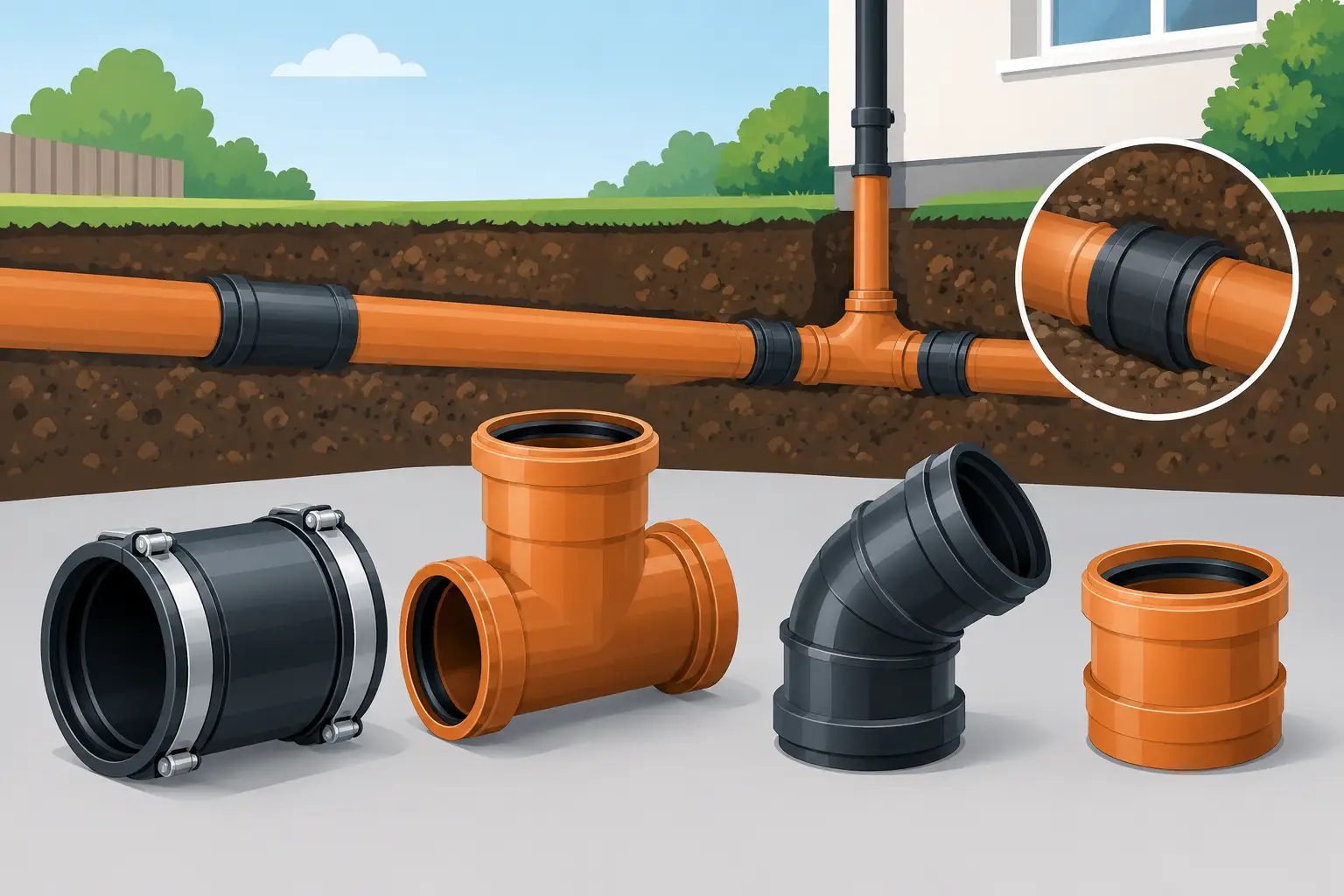
A drainage run is only as dependable as its joints. The best underground pipe connectors are not simply the strongest-looking fittings on the shelf. They are the connectors that match the pipe diameter, material, joint type and ground conditions of the installation, then remain watertight once the trench is backfilled.
For most domestic and light commercial foul-water or surface-water work, that means using compatible underground drainage fittings in 110mm, 160mm or 200mm sizes. Where an older clay system, cast iron pipe or a non-standard outside diameter is involved, a flexible adaptor may be the practical answer. Choosing correctly before excavation will save time, prevent leaks and avoid an awkward repair later.
The right connector must provide a secure seal without restricting flow or creating a point that is vulnerable to movement. Underground pipework experiences ground settlement, temperature changes, traffic loading and occasional root pressure. A connection needs to accommodate the realities of the site, not just fit together neatly at ground level.
For standard plastic underground drainage, purpose-made socket fittings with integral rubber seals are usually the first choice. They are designed for the pipe system, quick to assemble and suitable for routine foul and surface-water drainage runs. A correctly installed push-fit joint allows the pipe to seat into the socket while the seal keeps water in and soil out.
Compatibility matters more than a claimed universal fit. Check the nominal diameter, pipe profile and intended application. A 110mm underground drainage pipe is not interchangeable with 110mm soil pipe in every situation, even where the measurement appears similar. Likewise, drainage fittings should not be used to connect potable water mains pipe, which requires suitable compression fittings and WRAS-approved components.
A straight coupler is the usual connector for extending a run of plain-ended underground pipe. It is one of the most common fittings on a site because pipe lengths often need joining between chambers, gullies and branches.
For a new installation using matching 110mm plastic pipe, a double-socket coupler with captive rubber seals is generally the most dependable and cost-effective option. The same principle applies to 160mm and 200mm systems, where larger diameters are often specified for commercial drainage, shared runs or higher flows.
Before fitting, cut the pipe square and remove the burr from the inside and outside edge. A rough edge can dislodge or damage the seal as the pipe enters the socket. Clean the spigot end, check that the seal is correctly seated and apply a suitable pipe lubricant where required. Do not use oil, washing-up liquid or an improvised lubricant that could affect the rubber seal.
The pipe should be pushed fully home to the insertion mark, then set according to the fitting manufacturer’s allowance for expansion where applicable. Keeping the joint clean is particularly important in wet trenches, as grit caught under a seal can compromise the connection.
Use a standard coupler where both pipes are the same material, diameter and underground drainage type. It is the neatest option for new work and maintains the designed bore of the system. It is also easier to inspect during installation than a flexible connector hidden beneath excess wrapping or poorly compacted backfill.
A coupler is not the answer where the two pipes have different outside diameters, where one pipe is old clay or cast iron, or where the run needs a change in direction. In those cases, select an adaptor or the appropriate bend rather than forcing a straight fitting to do the wrong job.
Flexible rubber adaptors, often called flexible couplings, are valuable when connecting dissimilar materials. They are commonly used for repairs and upgrades where a modern plastic drainage pipe must join existing clay, cast iron or asbestos-cement pipework. Their stainless-steel bands clamp around the pipes to form a sealed transition.
This flexibility is useful, but it does not make every flexible connector suitable for every job. The connector must cover the actual outside diameter of both pipes. Older pipework can vary, so measure it rather than relying on a nominal size or visual judgement. A 110mm plastic pipe and an older clay pipe described as four-inch may need a specific adaptor range, not a standard 110mm-to-110mm coupling.
Flexible adaptors can also tolerate a limited degree of movement, which may help on repair work where the existing pipe is not perfectly aligned. However, they should not be used as a substitute for proper bedding, support or alignment. A pipe joint that is under constant strain can eventually move, even if the rubber connector initially appears tight.
Choose a quality connector with corrosion-resistant stainless-steel clamps and a rubber sleeve designed for below-ground drainage use. Tighten the bands evenly to the manufacturer’s recommended setting. Over-tightening can distort plastic pipe or damage the sleeve, while under-tightening risks leakage and soil ingress.
The best underground pipe connector is not always a straight join. Drainage works because wastewater and rainwater can travel freely along a correctly graded route. The fittings used to change direction or add a branch have a direct effect on that flow.
Use swept bends rather than tight turns wherever the layout allows. A gradual bend supports flow and makes rodding easier if the line ever blocks. Sharp changes of direction should be avoided, particularly on foul drainage, unless access is provided nearby through an inspection chamber or rodding point.
Branch connections should be made with purpose-designed junctions, normally set in the direction of flow. A 45-degree branch is generally preferable to a square tee in a horizontal drain because it introduces water into the main run more smoothly. This matters when connecting a gully, additional soil branch or surface-water inlet.
Access fittings are worth considering before the trench is filled. A rodding eye or access point can make maintenance far simpler on a long run, a run with bends or a section between chambers. It is a modest extra cost compared with excavating a blocked pipe beneath paving, turf or a driveway.
Underground drainage and underground water supply use different pipe systems and connectors. Drainage pipe relies on gravity and normally uses socketed push-fit fittings or flexible repair adaptors. Water mains pipe is pressurised, typically blue MDPE, and needs properly rated compression fittings, inserts and pipe liners where specified.
For potable-water installations, use WRAS-approved MDPE pipe and compatible fittings. A drainage coupler will not provide a safe or pressure-rated water connection, while a water fitting is not designed to replace a drainage socket. Keeping the systems separate is essential for performance and water hygiene.
The same rule applies to land drainage. Perforated land-drain pipe, twin-wall pipe and surface-water drainage products can have different connection methods from solid-wall foul-drainage pipe. Select fittings made for the pipe type and its intended load, especially where agricultural machinery, commercial vehicles or deeper cover levels are involved.
Even high-quality fittings can fail if the pipe is badly supported. Lay underground drainage on a firm, even bed of suitable granular material, maintaining the required fall towards the discharge point or chamber. Remove large stones and hard projections that could create point loading beneath a socket or flexible coupling.
Support joints carefully. A connector should not be left bridging a hollow in the trench, and sockets should not be forced up by uneven bedding. Once the line is aligned, surround it with selected material and compact in layers by hand around the pipe. Take care not to dislodge fittings or alter the gradient.
Test the run before final backfill. Depending on the project and applicable Building Regulations requirements, this may involve visual checks, water testing or air testing. It is far easier to correct a poorly seated seal, reversed fitting or incorrect fall while the pipe is exposed.
For drainage connected to a building, confirm the layout against the approved plans and relevant regulations. Separate foul and surface-water systems where required, provide suitable access and use chambers, gullies and traps appropriate to the installation. Connector choice is one part of a system that must work together.
Start with the pipe you are connecting, not the fitting you think looks closest. Record the material, actual outside diameter, system type and whether the connection is straight, reducing, branching or repairing a damaged section. Then consider access, expected loading and whether the pipe will need to accommodate slight movement.
For straightforward new plastic drainage, matching 110mm, 160mm or 200mm push-fit fittings offer a clean, reliable result. For repairs between different materials or diameters, a correctly sized flexible adaptor is often the sensible option. Adding compatible bends, junctions, inspection chambers and gullies at the planning stage also helps avoid last-minute compromises.
Speedy Plastics supplies underground drainage pipework, fittings and associated water-management products for domestic, trade and commercial applications at competitive VAT-inclusive prices. When measuring an existing connection, allow time to identify the pipe accurately before ordering. The right connector should feel unremarkable once installed: properly matched, correctly supported and ready to stay out of sight for years.