Speedy UK Deliveries
 100% SECURE PAYMENT
 VOLUME DISCOUNTS
 Contact us
Speedy UK Deliveries100% SECURE PAYMENTVOLUME DISCOUNTSContact us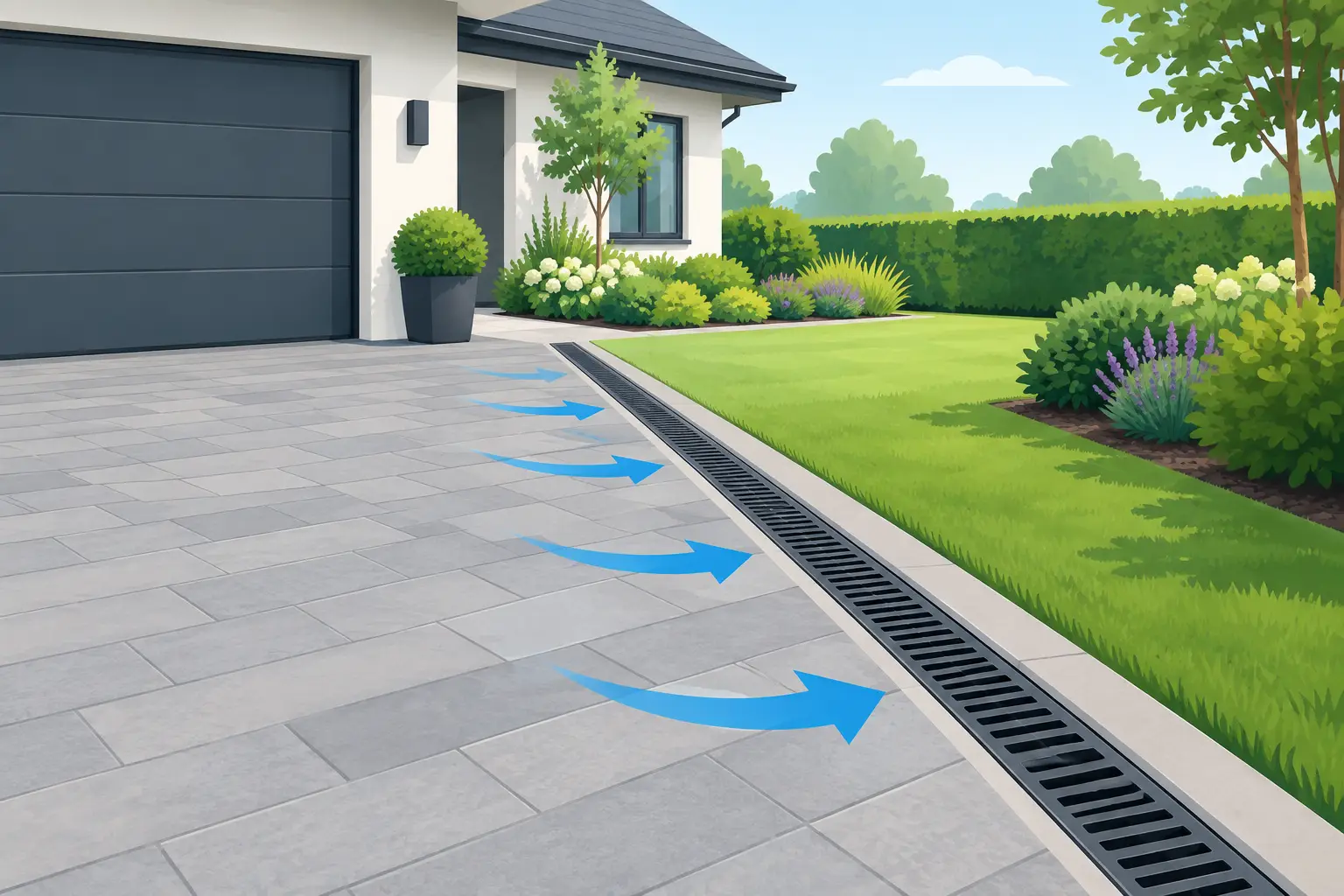
A puddle outside a garage door, water tracking across a patio or a driveway that freezes after rain are not minor finishing issues. They are signs that surface drainage has not been planned around the falls, ground conditions and available outfall. Getting the system right protects buildings, improves safe access and prevents water from repeatedly finding its own route through joints, thresholds and foundations.
For domestic and commercial projects alike, the practical aim is simple: collect rainfall quickly, carry it through compatible pipework, and discharge it at a suitable point without creating a problem elsewhere on the site. The right solution depends on the area being drained, the load over the drainage channel, local ground conditions and whether the water is going to a soakaway, watercourse or approved surface-water connection.
Surface drainage manages rainwater that lands on hard landscaping and external areas. Rather than allowing water to pond or run towards a property, it intercepts flow at low points and directs it into a controlled drainage system.
Typical applications include driveways, patios, paths, parking areas, courtyards, loading spaces, garage entrances and around outbuildings. It can also be used beside buildings where paving or concrete levels leave little room for water to soak naturally into the ground.
The most common components are channel drains, gratings, gullies, catchpits, underground pipework and inspection chambers. A channel drain is often the visible part of the system, but it is only effective when it has an adequate outlet, correctly sized pipe and a proper discharge point. Installing a channel across a driveway without considering where the collected water will go simply moves the ponding problem below ground.
Before selecting a channel or gully, establish how water currently moves across the site. Check the highest and lowest levels, door thresholds, garage openings, retaining walls and existing drains. On a new driveway or patio, falls should direct water away from the building and towards the collection point.
A fall of around 1:80 is commonly used for paved external areas, although the correct gradient depends on the finish, level tolerances and project layout. Very shallow falls can leave standing water, particularly on uneven natural stone or textured paving. Excessive falls may be noticeable underfoot and can send water too quickly towards one point during heavy rainfall.
It also pays to consider roof water. Downpipes should not discharge directly onto a driveway or patio where they add concentrated flow to an already wet surface. Connecting rainwater pipes into a suitable underground surface-water system can make the whole layout more controlled, provided the receiving drainage arrangement has capacity.
Channel drainage is usually the most effective option where runoff needs to be intercepted along a straight line. A channel placed across the entrance to a garage, in front of a threshold or at the bottom of a sloping driveway catches water before it reaches the vulnerable area.
The choice is not just about channel width or grate appearance. Load class matters. A pedestrian path may only need a light-duty channel, while a domestic driveway needs a system rated for regular car traffic. Areas used by vans, delivery vehicles, agricultural machinery or commercial traffic require a more substantial load rating and correctly prepared concrete surround.
Plastic channel systems are popular for domestic and light commercial work because they are lightweight, straightforward to cut and available with compatible end caps, outlets and connectors. Galvanised steel, ductile iron or heavy-duty composite gratings may be more appropriate where wheel loads are higher or where a particular finish is required.
When comparing products, check the clear opening, overall depth, outlet size and grating load class. A narrow, shallow channel can suit a patio, but a larger catchment area or long sloping drive may need greater capacity. One outlet at the end of a long run is not always enough. Additional outlets or a central outlet can reduce the distance water must travel within the channel during intense rain.
Gullies are useful where water arrives at a single point, such as beneath a downpipe or at the lowest point of a paved area. They can also form the connection between a channel outlet and the underground drainage run. Select a gully with a suitable grate and sump arrangement for the location, especially where leaves, grit or driveway debris are likely to collect.
For many domestic surface-water installations, 110mm underground drainage pipe and fittings provide a practical, widely compatible system. Larger 160mm or 200mm pipework may be required for bigger catchments, commercial works or runs designed around higher flow volumes. Pipe diameter should be selected from the expected rainfall catchment and the drainage design, not simply from what is easiest to obtain.
Use compatible bends, junctions and socketed fittings to maintain a watertight route. Keep the underground pipe run as direct as practicable and avoid unnecessary sharp changes of direction. Inspection chambers or access points should be included where future rodding and cleaning may be needed, particularly at changes in direction or at the meeting point of several drainage lines.
A system that cannot be cleaned is a system that will eventually become unreliable. Leaves, silt, gravel and moss will all find their way into external drainage over time.
The discharge point is the part of surface drainage that needs the most care. In many projects, the preferred approach is to manage water within the site through a soakaway or other sustainable drainage arrangement. A soakaway uses crates or granular storage wrapped in a suitable geotextile membrane to hold water temporarily and allow it to infiltrate into surrounding ground.
This only works where ground conditions are suitable. Clay-heavy ground, a high water table, contaminated land, shallow bedrock or a small site close to foundations can make a soakaway unsuitable or require a professionally designed alternative. Percolation testing is used to assess whether the ground can accept the expected volume of water.
Where infiltration is not viable, surface water may need to connect to an approved surface-water sewer or another authorised discharge point. Requirements vary by location, development type and local water authority arrangements. Never assume that a foul drain can accept rainwater, or that an existing connection has enough capacity. For larger schemes, extensions and areas of new impermeable surfacing, check the relevant Building Regulations guidance and local approval requirements before work begins.
A drainage channel is only as strong as its installation. Excavate to allow for the channel body, bedding material and concrete support where required by the manufacturer. The grate should normally finish flush with, or slightly below, the surrounding surface so that water enters rather than bypasses it.
Set the channel line accurately before paving is completed. It is much harder to correct levels after blocks, slabs or tarmac are in place. Protect channel interiors from mortar, concrete and debris during installation, then remove all construction material before fitting the grates.
For underground pipework, provide a stable trench base and lay the pipe to a consistent fall. Backfill carefully around the pipe so that it is supported without being distorted by large stones. Where a channel outlet joins the pipework, use the manufacturer’s compatible outlet fitting rather than improvised cuts and sealants.
On driveways, pay particular attention to the channel surround and edge restraint. Vehicle loading can crack poorly supported channels or loosen paving beside the grate. This is one area where spending slightly more on the correct load-rated system and installation materials is cheaper than repairing a failed entrance later.
Surface-water systems need simple, regular maintenance. Lift gratings and remove leaves, grit and accumulated silt, especially in autumn and after building work. Check that downpipe gullies are clear and that channel outlets have not become blocked by debris.
After prolonged or heavy rain, inspect the area for slow drainage, standing water or water escaping at joints. These signs may indicate a blocked outlet, inadequate fall, damaged pipework or a soakaway that is not dispersing water as expected. Early cleaning is normally straightforward; leaving a blockage through winter can lead to frozen surfaces, overflow and damage to nearby paving.
For a new driveway, patio or commercial hardstanding, choosing compatible channels, gullies, underground drainage pipe and access components from one specialist supplier helps avoid mismatched connections on site. Speedy Plastics stocks trade-ready drainage products for projects where reliable sizing, practical installation and fast UK delivery matter.
The best time to solve drainage is while levels are still being set. Plan the water route before the final surface goes down, allow access for maintenance, and give rainwater somewhere suitable to go rather than somewhere expensive to repair.