Description
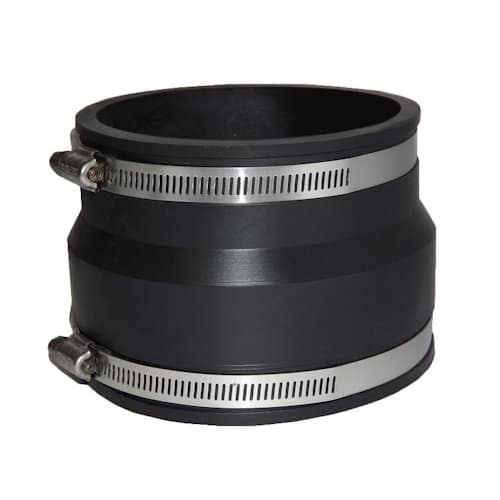
4 Inch Clay to PVC Pipe Connector for Underground Drainage
The
clay to PVC pipe connector joins compatible 4-inch clay drainage pipe to modern 110mm PVC underground drainage pipe. It provides a practical connection for drainage repairs, alterations and replacement work where older clay pipework meets a newer plastic drainage system. The larger connection accepts clay pipe with an outside diameter of
132–142mm. Meanwhile, the smaller connection accepts PVC drainage pipe measuring
105–114mm externally. Always measure the outside diameter of both pipes before ordering because nominal 4-inch clay pipes can vary in size.
Clay to PVC Pipe Connector Size Range
- Clay pipe outside diameter: 132–142mm
- PVC pipe outside diameter: 105–114mm
- Nominal connection: 4-inch clay to 110mm PVC
- Flexible stepped adaptor design
- Black EPVC connector body
- Stainless-steel securing clamps
- Supplied as one complete connector
The stepped body allows the fitting to connect pipes with different external diameters. Each stainless-steel clamp tightens around its respective pipe, creating a firm mechanical connection without solvent cement or a traditional drainage socket.
Where to Use the Clay to PVC Pipe Connector
Use this connector when an existing clay drainage run needs to connect to 110mm plastic pipework. It is particularly useful when replacing a damaged section of clay pipe, extending an existing drain or changing part of an older drainage system to PVC. The flexible construction can also accommodate small differences in pipe alignment. However, the pipes must still line up correctly and retain the required drainage fall. The connector should not support the weight of unsupported pipework. Typical applications include:
- Connecting old clay drains to new PVC drainage pipe
- Repairing cracked or damaged underground pipework
- Replacing part of a clay drainage run with plastic pipe
- Extending an existing underground drainage system
- Joining compatible pipes with different outside diameters
- Domestic, commercial and general groundwork projects
Measure Both Drainage Pipes Before Ordering
Measure the outside diameter of both pipes rather than relying only on their nominal description. First, clean enough of each pipe to expose a sound and circular section. Next, measure directly across the outside of the pipe with a suitable tape or calliper. The clay side must measure between
132mm and 142mm. The PVC side must measure between
105mm and 114mm. Do not install the connector when either pipe falls outside these ranges. Older clay drainage products can vary by manufacturer, age and pipe type. In addition, sockets and collars are wider than the plain pipe barrel. Therefore, take measurements from the exact sections that will sit inside the connector.
Preparing the Clay and PVC Pipework
Cut each pipe as square as possible. Then remove soil, grit, loose clay, burrs and sharp edges. The connector needs a clean and reasonably even surface so the flexible body and clamps can grip the pipes correctly. Take care when cutting old clay drainage pipe because cracks can travel beyond the intended cutting point. Support the pipe properly and use suitable cutting equipment. If the clay pipe is cracked, crumbling or badly distorted, cut it back to a sound section before installing the connector. Inspect the PVC pipe as well. Remove burrs and sharp edges that could mark the inside of the connector. Both pipe ends should remain circular and free from severe damage.
Installing the Clay to PVC Pipe Connector
First, loosen both stainless-steel clamps enough to allow the connector to move over the pipes. Do not remove the clamps from the connector. Slide the larger end over the prepared clay pipe. Then position the 110mm PVC pipe inside the smaller end. Bring the two pipe ends into alignment and centre the connector across the joint. Check the drainage fall before tightening the clamps. Once the pipes are correctly positioned, tighten each clamp gradually and evenly. Make sure the connector remains straight and does not twist, fold or pull away from either pipe. Do not overtighten one clamp while the other remains loose. Alternating between the two clamps helps keep the connector centred and maintains even pressure around both pipes.
Supporting and Backfilling the Connection
Support the surrounding drainage pipework with suitable bedding. The connector should join the pipes rather than carry their weight. Good bedding also reduces movement and helps protect the completed joint. Before backfilling, inspect the full connection. Check that both clamps sit squarely, the connector grips each pipe evenly and the drainage run retains its required fall. Keep sharp stones, rubble and other damaging material away from the flexible connector. Complete the installation according to the drainage design, site requirements and applicable building guidance.
Compatible Underground Drainage Products
Browse the complete
flexible drainage connector range for other repair couplings and pipe adaptors. You can also view the full
110mm underground drainage range for compatible pipes, bends, branches and drainage accessories. For general guidance on below-ground foul water drainage in England, refer to the official
Approved Document H drainage guidance.