Speedy UK Deliveries
 100% SECURE PAYMENT
 VOLUME DISCOUNTS
 Contact us
Speedy UK Deliveries100% SECURE PAYMENTVOLUME DISCOUNTSContact us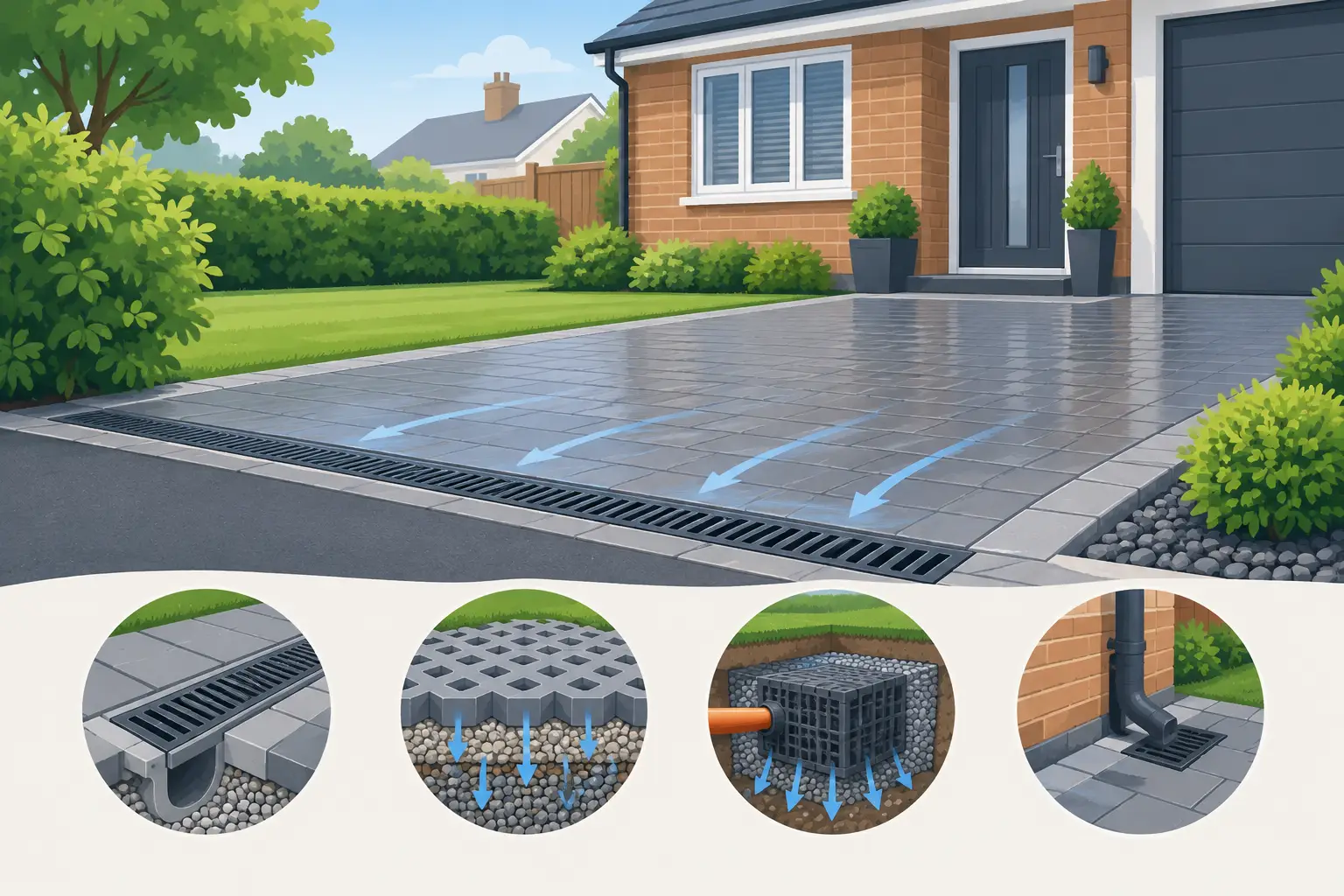
A driveway that sends water towards the garage, house wall or pavement is not just inconvenient after heavy rain. Standing water can soften sub-base materials, stain block paving, create slip hazards and, over time, contribute to damp problems. The best driveway drainage solutions collect surface water early, move it through correctly sized pipework and discharge it to a suitable location without overloading the public sewer.
The right system depends on the driveway finish, fall, soil conditions and where the water can legally go. A channel drain may be the direct answer at a garage entrance, while a soakaway or permeable surface may be more appropriate for managing the wider driveway area. Treat drainage as part of the driveway build-up, not an accessory added once puddles appear.
Before choosing a grate or pipe, establish the natural fall of the site. Water should be directed away from buildings and should not run unchecked onto a public highway or a neighbouring property. A driveway can look level but still hold water in shallow low points, particularly where paving has settled or a new surface has been laid over an older base.
For many domestic projects, surface water is collected and discharged to a soakaway within the property boundary. This lets water drain gradually into the ground rather than being sent to the foul sewer. Soil permeability matters here. Free-draining ground may suit a conventional crate or stone-filled soakaway, whereas dense clay, a high water table or limited garden space can make infiltration impractical.
If a connection to a surface-water sewer is proposed, verify that one exists and that connection is permitted. Foul and surface-water systems must not be mixed. Drainage requirements and planning controls also vary across the UK, so check the relevant local authority guidance before starting work.
In England, front-garden driveways over 5 square metres commonly need planning permission if an impermeable surface directs water onto the road and does not drain to a permeable area or soakaway. Permeable paving and properly designed on-site drainage can often avoid that issue, but the installation still needs to perform as intended.
Channel drainage, also called linear drainage, is usually the most reliable option where water crosses a doorway, garage threshold, gate line or the bottom of a sloping drive. The channel sits flush with the finished surface and intercepts runoff before it reaches the vulnerable area.
A channel should be installed on a stable concrete bed with the surrounding paving or tarmac finished neatly to the grate edge. The grate loading class must suit the traffic using the area. A lightweight pedestrian channel is not suitable where cars regularly pass over it. For domestic vehicle areas, select a system designed for the anticipated wheel loading and ensure the channel body, grate and outlet are all compatible.
One or more outlets connect the channel to underground drainage pipework. On a typical domestic installation, 110mm underground drainage pipe provides a practical route to an inspection chamber, silt trap or soakaway. Position access points where they can be cleaned without lifting large sections of paving. Leaves, grit and road debris will enter a driveway channel, so maintenance is part of the design rather than an optional extra.
A soakaway crate system stores collected water temporarily and releases it into suitable surrounding ground. It is a space-efficient option where water is being collected from channels, gullies or downpipes and there is sufficient room away from buildings and boundaries.
The crates are wrapped in a geotextile membrane when infiltration into the ground is required. The membrane keeps surrounding soil from entering and blocking the voids while allowing water to pass through. Where a crate is used as a storage tank rather than an infiltration soakaway, a waterproof geomembrane is used instead, with a controlled outlet to another approved discharge point.
Do not select crate volume by driveway area alone. Allow for local rainfall, the impermeable catchment area and the ground’s infiltration performance. A percolation test gives a much more dependable basis for sizing than assuming that a small garden soakaway will cope with a large resin-bound or tarmac drive. If the ground drains poorly, increasing crate capacity may only delay the problem.
Permeable block paving, porous asphalt and resin-bound systems can reduce the volume of surface water reaching a channel drain. Water passes through the finished surface into an open-graded sub-base below, where it either infiltrates naturally or is conveyed to a drainage outlet.
This approach gives a clean appearance because the drainage is built into the construction. It also works well on broad drives where a single channel would have to collect a large amount of water over a long distance. However, it is only effective if the full build-up is specified correctly. Ordinary compacted sub-base can prevent water moving through the system, and fine material migrating into the voids can reduce capacity.
Permeable paving still benefits from edge restraint, appropriate falls and a plan for exceptional rainfall. It should also be maintained. Sweeping or vacuuming the surface helps prevent pores becoming blocked with silt, moss and leaf litter.
A French drain is a gravel-filled trench containing perforated land drainage pipe. It is useful along the edge of a driveway where water is entering from a bank, lawn or adjoining ground, or where the sub-base needs relief from persistent groundwater.
It is not normally the best stand-alone solution for fast runoff across an impermeable driveway. Surface water can carry fine debris that gradually clogs gravel and perforations. In most cases, use a channel drain for the hard surface and reserve perforated land drainage for intercepting subsurface water. Wrap the trench in a suitable geotextile membrane and provide a proper outfall, otherwise the trench simply becomes a water-filled strip of gravel.
Drainage failures often come from mixing suitable individual products into an unsuitable layout. A channel with no adequate outlet will fill and overflow. A soakaway connected with undersized pipework may receive water too slowly in a storm. A pipe run without access can become difficult to clear when sediment builds up.
For a standard domestic driveway, the usual sequence is channel drain or gully, trapped or silt-control point where required, 110mm underground pipe, inspection chamber and soakaway or approved surface-water connection. Bends, junctions and pipe gradients should allow water and debris to travel freely. Avoid unnecessary sharp turns, and use inspection chambers or rodding access at changes in direction and key junctions.
The pipework needs a stable bed and correct fall. Too little gradient can leave sediment behind; excessive gradient can allow water to outrun solids in some applications. Follow the requirements of the selected drainage system and keep every connection watertight. Underground drainage is far easier to install correctly before the driveway sub-base and surface are completed.
A domestic driveway system is exposed to vehicle movement, frost, grit and occasional heavy rainfall. Choose drainage channels with grates that suit the finish and loading, whether that is galvanised steel, plastic or ductile iron. Appearance matters at a front entrance, but strength and secure grate locking matter more where vehicles cross.
Use compatible underground drainage fittings rather than forcing together mismatched components. Socketed 110mm pipe and fittings are widely used for domestic surface-water runs, while inspection chambers provide practical access for cleaning and future maintenance. For larger commercial yards, agricultural access routes or areas with regular heavier traffic, pipe diameter, channel load class and storage capacity may all need to increase.
Speedy Plastics supplies trade-ready channel drainage, 110mm underground drainage pipework, inspection chambers, land drainage, soakaway crates and membranes, allowing connected components to be specified from one source. Check product dimensions, outlet sizes and load ratings before ordering, especially where an existing system is being extended.
The finished driveway should fall towards the drainage collection point without creating a visible dip that catches tyres or interrupts access. Set channel grates level with, or fractionally below, the adjacent surface. If they sit proud, they can be damaged by traffic; if they sit too low, surrounding edges can break down.
Keep the channel outlet clear of concrete ingress during installation and test the run before backfilling. A hose test will quickly show whether water reaches the chamber or soakaway as expected. Where channels sit near a garage or external door, test with a realistic volume of water rather than a light trickle.
Backfill pipes with suitable granular material, compact in layers and protect them from point loads. The driveway base should not bridge poorly compacted trenches, as settlement can later create the same low spot that the new drainage was intended to solve.
Even a correctly installed system needs a simple maintenance routine. Clear leaves and grit from channel grates after autumn leaf fall and before periods of forecast heavy rain. Lift removable grates, remove trapped debris and check that outlets are free-flowing. Inspection chambers should be checked periodically, particularly on drives used by builders’ vehicles, gardeners or machinery that can bring mud onto the surface.
A driveway drainage system does not have to be complicated, but it does need a clear route from rainfall to discharge. Start with the fall, match the drainage method to the ground and surface, then use compatible channels, pipework and access points. That approach protects the driveway finish, keeps water away from the building and makes future maintenance straightforward.